Every surface
fails differently.
Sprung timber, polyurethane, vinyl, point-elastic, area-elastic, mixed-element. Indoor sports surfaces are not a single category — and the failure mode that drives a slip claim depends on the construction.
| Surface family | Typical PTV (dry) | Typical PTV (wet) | Common failure mode |
|---|---|---|---|
| Sprung beech / maple (sealed) | 40 – 55 | 32 – 45 | Sealant build-up reducing micro-roughness; polish residue. |
| Sprung beech / maple (unsealed) | 35 – 48 | 28 – 38 | Wear-through to bare timber; differential grip across worn / unworn zones. |
| Polyurethane (point-elastic) | 50 – 70 | 45 – 65 | Loss of texture under heavy use; cleaning chemistry deposit. |
| Polyurethane (area-elastic / sub-floor) | 50 – 70 | 45 – 65 | Surface dusting; UV-related chalking near skylights. |
| Multi-use vinyl (Taraflex etc.) | 45 – 60 | 40 – 55 | Embossed texture flattening over time; cleaning film. |
| Linoleum sports surface | 40 – 55 | 30 – 45 | Surface seal dulling; wax build-up. |
| Acrylic indoor tennis | 50 – 70 | 40 – 60 | Filler bind loss; ITF Court Pace drift. |
Indicative ranges drawn from BS 7976-2 testing across UK sports halls. Single-figure values are not a substitute for survey.
The classic. The most-tested. The most-misdiagnosed.
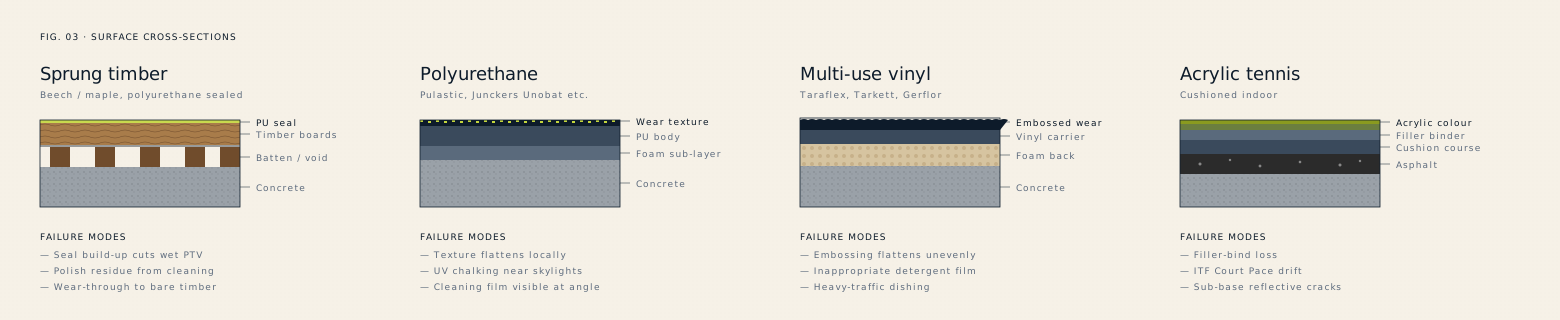
Beech and maple battened sub-floors, surface-sealed with one-pack or two-pack polyurethane finish. The dominant sports hall surface in UK schools, leisure centres and community halls built between 1970 and 2010. The vast majority of our in-service slip surveys are conducted on this construction.
The classic failure pattern: the surface seal builds up year-on-year through cleaning regimes that deposit polymer residue. Dry PTV stays comfortably above 36; wet PTV drops below 30. The hall “feels fine” in normal play and becomes acutely unsafe the moment a water bottle leaks. Most claims arise here.
Resolution is rarely re-sanding. More often it is a controlled change of cleaning regime, with re-test at six and twelve months.
Higher grip when new. Different failure curve.
Pulastic, Junckers Unobat, Gerflor Sportcourt, Tarkett Omnisports, Pavigym and similar. Cast or roll-installed elastic systems with a textured wear-layer. EN 14904 compliant on installation. Common on new-build secondary school and leisure centre installations from c. 2000 onwards.
Failure modes are different from timber: surface texture flattens under heavy traffic in localised areas (centre court, free-throw lines, baseline zones); UV near skylights causes chalking; cleaning chemistry can leave an iridescent film visible at low angles. PTV remains high until the wear is well-advanced, at which point it drops sharply over a small wear band — making periodic testing more important than on timber, not less.
Ubiquitous. Often unspecified. Frequently mis-cleaned.
Taraflex, Tarkett Omnisports Reference, Gerflor Recreation, Polyflor and similar — rolled multi-use vinyl, often laid over a foam back-layer. Standard in primary schools, community halls and ad-hoc multi-use spaces.
When new, performance is excellent. The wear surface is heavily embossed and PTV is comfortably high in both dry and wet conditions. Two failure modes dominate: embossing flattens over heavy-use zones in 5–10 years (often unevenly), and inappropriate cleaning regimes — particularly mop-and-bucket use of unsuitable detergents — deposit a film that flattens performance further.
Tested twice. Once for grip; once for pace.
Indoor tennis surfaces — cushioned acrylic over asphalt, carpet, sand-dressed needlepunch — are tested against two parallel programmes. BS 7976-2 for slip resistance to UK occupational standards; the ITF Guide to Test Methods for Tennis Court Surfaces for Court Pace Rating, planarity, ball rebound and ITF Recognition.
Surface Performance is recognised by the ITF as a testing organisation eligible to conduct One-Star and Two-Star ITF Recognition assessments. We are one of a small number of UK organisations that can deliver both UKAS-endorsed slip resistance testing and ITF-recognised performance testing on a single court visit.
Different surface? We’ll scope it.
Cork, rubber crumb, carpet tiles, removable tile systems, niche manufacturers — speak to a specialist about scope.
Request a Quote →